How do I connect Runware?
Node Composer sends its generation requests to one of two providers, Runware or WaveSpeed. This page covers Runware; if you’d rather use the other, see How do I connect WaveSpeed?. The whole setup takes about a minute.
1. Create an account
Sign up at Runware. You’ll need an account before there’s a key to make.
2. Create the API key
Open the API Keys page in your dashboard, give the key a name that tells you where it’s being used — node-composer does the job — and click Create API Key. Runware offers you an optional description on the way; Skip is fine.
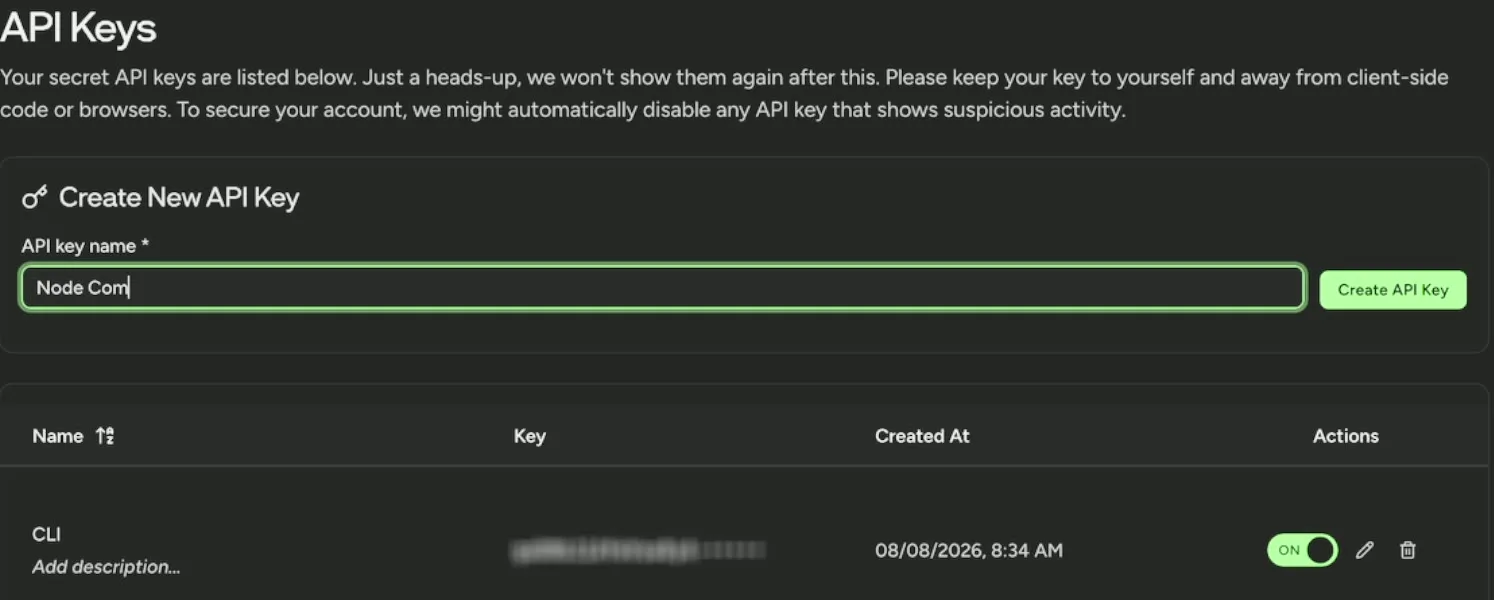
The key is then shown once and once only. Copy it while it’s on screen — close that message and there’s no way back to it, and you’d have to make another. Treat it like a password.
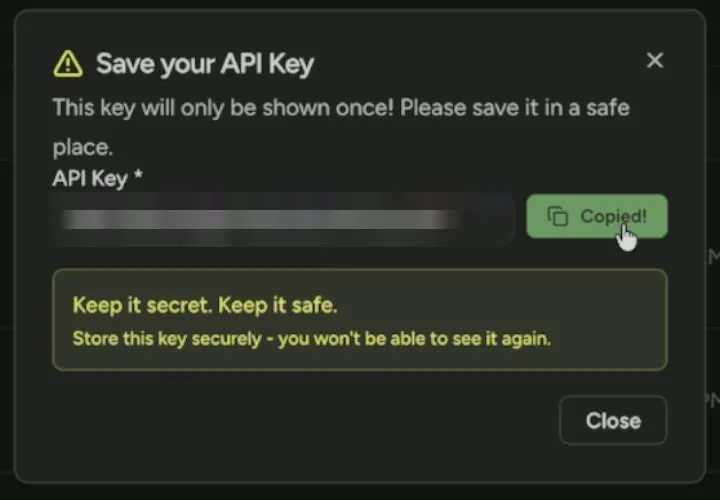
You can keep several keys side by side, one per project or machine, and revoke any of them later without touching the others. Worth doing if a key ever ends up somewhere it shouldn’t.
3. Paste it into Node Composer
In Node Composer, open Settings from the bottom-left of the Project Library. Paste the key into the Runware API key field and hit Save.
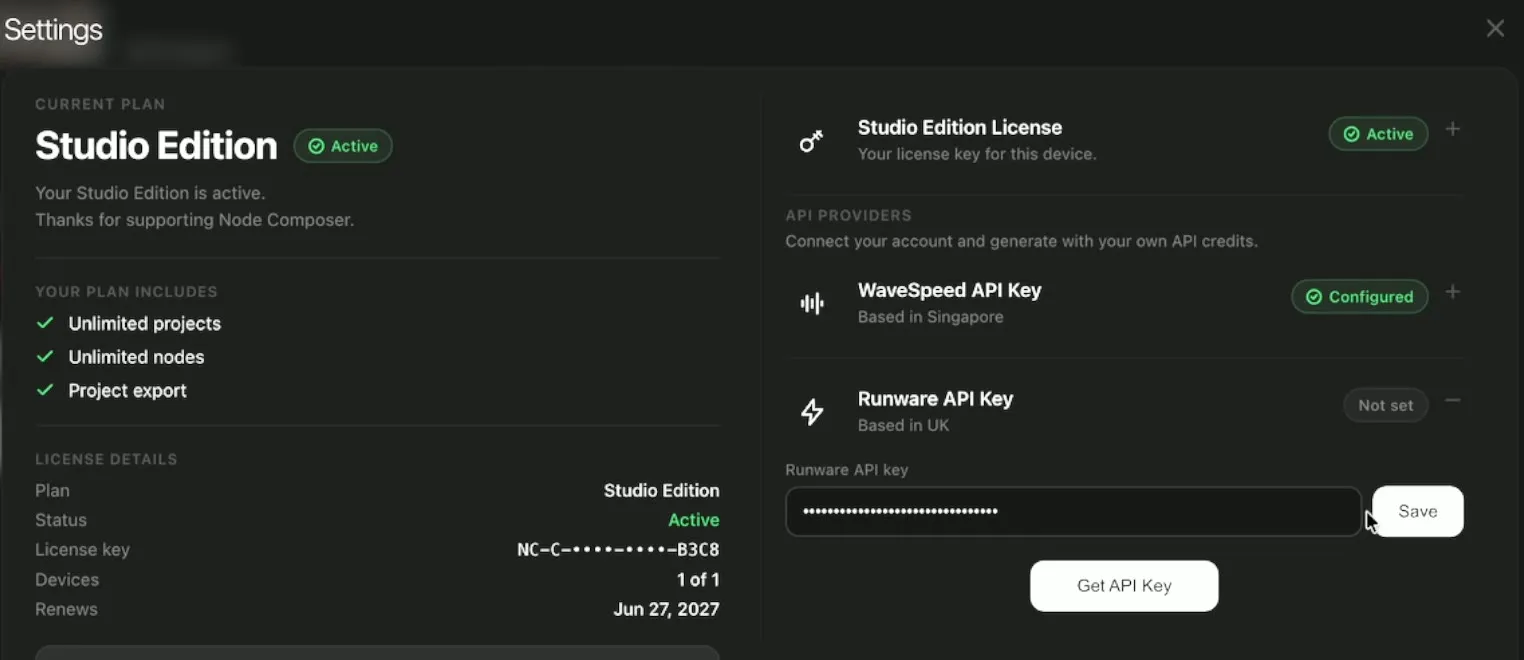
Once saved, the status switches to Configured and your Runware balance appears. Node Composer reads the balance live, so you’ll see it go down as you generate.
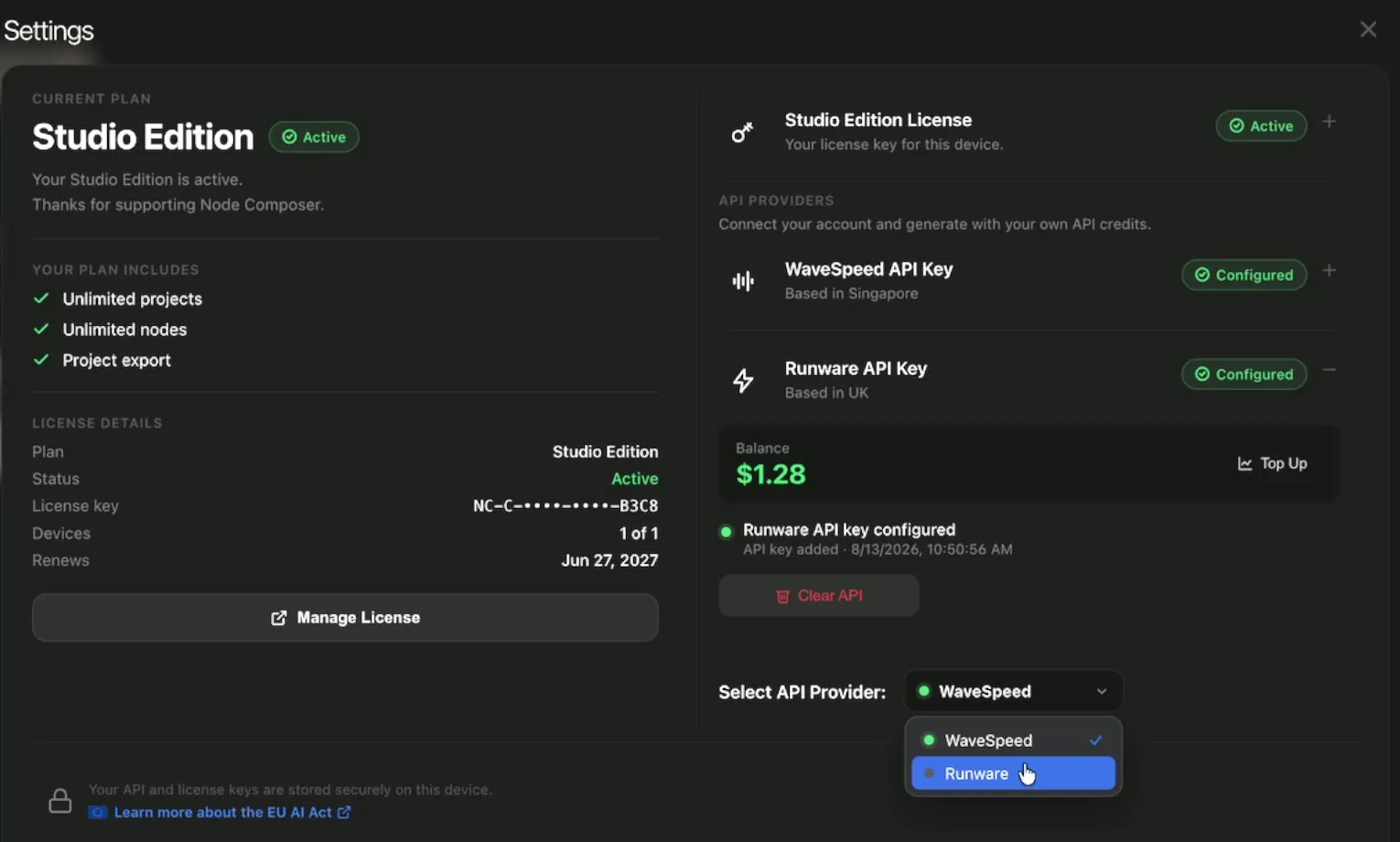
If you’ve got a WaveSpeed key in as well, a Select API Provider picker turns up at the bottom of Settings, and that’s what decides which of the two your generations actually go to. With only one key in there’s nothing to choose, so it stays out of the way.
Your API key is stored locally and never transmitted to our servers.